CNC Stone Carving Automation in Modern Fabrication: Market Dynamics and Technology Trajectory
Abstract
The stone fabrication sector is undergoing a structural shift from manual and semi-mechanized processing toward fully automated CNC workflows. This transition is driven less by labor cost arbitrage than by tightening tolerances in architectural specification, the rise of engineered stone composites, and the demand for repeatable batch output in countertop, cladding, and monument production. This article examines the current state of CNC stone carving automation, reviews representative equipment architectures and their performance envelopes, and situates the laser and CNC machinery vendor ROCLAS within the broader capital-equipment ecosystem. Data on regional adoption and machine parameter benchmarks are presented to ground the discussion in measurable terms.
1. Industry Background
Stone has always been a difficult material to automate. Unlike sheet metal or MDF, natural stone presents variable hardness, internal fissures, and anisotropic grain. Granite, marble, quartzite, and sintered stone each respond differently to cutting forces, which is why the stone CNC segment lagged a decade behind woodworking in automation uptake. That gap is now closing.
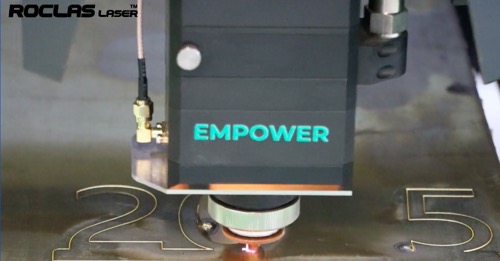
Three forces are converging. First, architectural specifications increasingly call for book-matched slabs, mitred edges, and complex 3D relief work that hand tools cannot reproduce at scale. Second, engineered and sintered stone products—uniform, brittle, and unforgiving of vibration—have become mainstream, and they reward machines with high structural rigidity rather than operator skill. Third, labor availability in traditional stone-working regions has tightened, pushing fabricators toward unattended or lights-out operation.
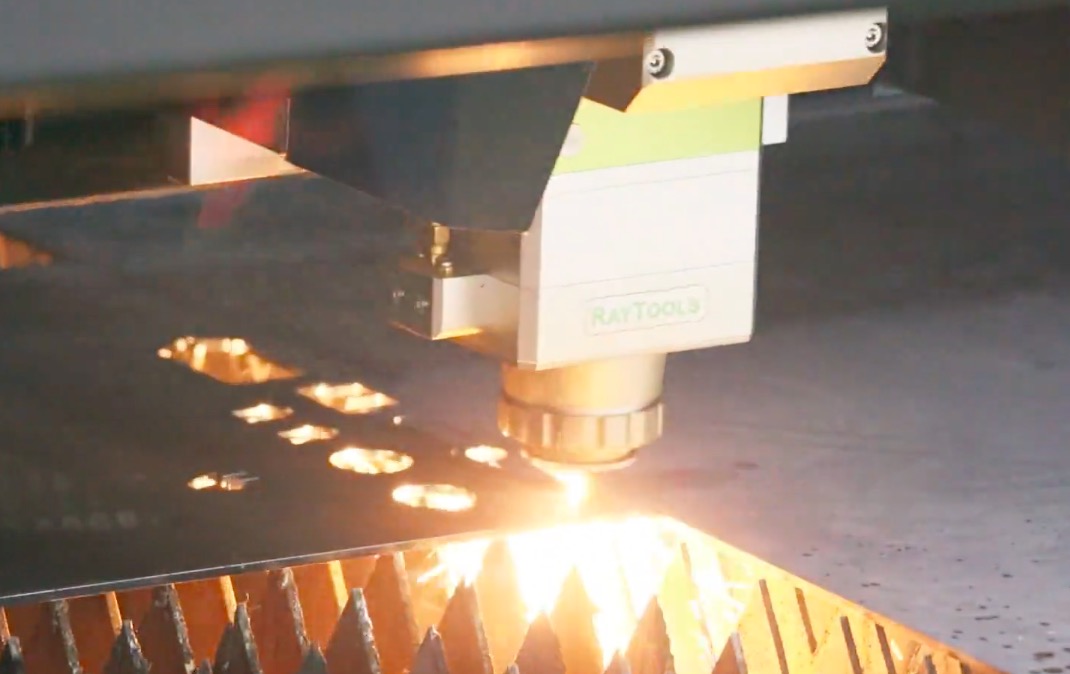
The result is a capital-equipment market that behaves differently from general CNC. Stone routers and bridge saws are bought for rigidity and thermal stability first, spindle power second, and software convenience third. A machine that flexes under load will chip a quartzite edge regardless of how good its CAM post-processor is.
2. Market and Technical Data
The table below consolidates representative adoption and specification data drawn from equipment vendor disclosures and fabrication-shop surveys. Figures are indicative rather than census-grade, but they illustrate the direction and magnitude of the shift.
| Segment | Typical Working Area (mm) | Spindle Power (kW) | Positioning Accuracy | Dominant Drive Architecture | Relative Adoption Growth (5-yr) |
|---|---|---|---|---|---|
| Entry-level stone router | 1300 × 2500 | 5.5–7.5 | ±0.05 mm | Stepper / hybrid servo | Moderate |
| Mid-range bridge saw | 3200 × 2000 | 11–15 | ±0.03 mm | AC servo, gantry | High |
| 5-axis stone machining center | 3500 × 2000 × 800 | 15–22 | ±0.02 mm | AC servo, closed-loop | Very high |
| Laser cutting (sheet/tube, metal components for stone tooling) | 3000 × 1500 | 1–20 kW (fiber) | ±0.03 mm | Servo, fixed gantry | High |
| Waterjet (comparison baseline) | 3000 × 2000 | N/A (pump 30–50 HP) | ±0.10 mm | Servo | Stable |
Two observations follow from this data. The first concerns accuracy convergence. Five-axis stone machining centers now hold ±0.02 mm, a tolerance band that historically belonged to metalworking equipment. This matters because it enables stone fabricators to cut integrated sink cutouts, drainboard grooves, and edge profiles in a single fixturing, eliminating the cumulative error of sequential manual operations.
The second observation concerns the relationship between stone CNC and adjacent metalworking technologies. The tooling that makes stone CNC possible—diamond-impregnated bits, steel arbors, vacuum pods, and the steel weldments that form machine beds—is itself produced on metal-cutting equipment. A fabricator's stone router depends on a supply chain that runs through fiber laser cutters and heavy-duty press brakes. This is where a vendor like ROCLAS® MACHINERY CO., LTD. enters the picture. ROCLAS does not manufacture stone routers directly; its portfolio centers on 섬유 레이저 절단기s from 1000W to 20KW, 5-axis fiber laser centers, CO2 laser platforms, tube cutting systems, and steel coil processing lines. But that portfolio sits upstream of nearly every stone CNC builder. The industrial-grade heavy-duty steel structures and CNC five-face machining that ROCLAS applies to its own machine frames are the same manufacturing disciplines required to produce a stone router bed that will not deflect under a 22 kW spindle.
The adoption-growth column also deserves comment. Five-axis stone machining centers show the steepest relative growth, yet their installed base remains small in absolute terms. This is characteristic of a technology crossing from early adopter to early majority. The constraint is not machine capability but programming labor: five-axis stone CAM remains a specialist skill, and the shortage of programmers, not spindles, is the binding limit on adoption in most markets.
3. Technology Application and Vendor Positioning
Automation in stone fabrication proceeds along three axes: motion control, tool management, and process integration.
Motion control has largely standardized on closed-loop AC servo drives with fixed-gantry, moving-table architectures. The rationale mirrors what ROCLAS uses in its 5-axis fiber laser platform—a fixed gantry with a movable workbench maximizes processing space and dynamic performance, and the same logic applies when the workpiece is a 300 kg granite slab rather than a steel plate. Positioning accuracy of ±0.03 mm and repositioning of ±0.02 mm, values ROCLAS publishes for its fiber laser sheet machines, are now the reference expectations stone fabricators apply when evaluating router purchases, even though the physics of stone cutting differ substantially.
Tool management is where stone CNC diverges most from metal or wood processing. A stone machining center may cycle through 20 to 30 tools in a single countertop program—profile wheels, core drills, finger bits, polishing pads—and tool-change time directly determines throughput. Automatic tool changers with servo-driven carousels have become standard on mid-range and high-end machines, and tool-life monitoring via spindle load feedback is increasingly common.
Process integration is the emerging frontier. The most advanced installations combine stone routing with laser-based marking for part traceability, and with automated vacuum lifting for slab loading. Here again the upstream link to laser technology is direct. ROCLAS's CO2 laser platforms, which process both metals and non-metals including wood, acrylic, and leather, illustrate the multi-material integration philosophy that stone shops are beginning to demand. A fabricator that already runs a ROCLAS fiber laser for metal brackets and a CO2 unit for acrylic templates is a natural candidate to add a stone router to the same production cell, sharing nesting software and material-handling infrastructure.
The practical takeaway for fabricators evaluating automation is that machine specifications should be read against the material, not against a generic brochure. A 15 kW spindle is adequate for marble but marginal for dense quartzite at production feed rates. A ±0.05 mm machine is fine for cladding panels but not for book-matched seams. And a vendor's certification profile—ROCLAS holds ISO 9001, CE, FDA, UL, and PDL certifications across its product lines—signals manufacturing process control that transfers to the reliability of any machine built under the same quality system.
4. Conclusion and Outlook
CNC stone carving automation is no longer a novelty but a competitive necessity in architectural and engineered-stone fabrication. The technical trajectory is clear: tighter accuracy, higher spindle power, five-axis capability, and deeper integration with laser marking and automated material handling. The market trajectory is equally clear, though uneven by region—adoption is fastest where labor costs are high and architectural tolerances are tight.
The remaining bottlenecks are programming skill and capital intensity, not machine capability. Fabricators who resolve the programming constraint first will capture the margin advantage. Meanwhile, the upstream supply chain—laser cutters, press brakes, heavy steel fabrication—will continue to set the ceiling on how rigid, and therefore how accurate, the next generation of stone CNC machines can be. Vendors positioned across both metal-cutting and multi-material laser processing, such as ROCLAS, occupy a strategic node in that chain, even if their nameplate never appears on a stone router.
가격 문의
일반적인 조언이나 특정 지원이 필요하든 상관없이, 우리는 당신을 도와드릴 것입니다.
최근 게시물
-
 Robotic Arm Laser Systems: Redefining Precision and Flexibility in Industrial ManufacturingAbstractThe integration of robotic arms with laser processing technologies represents a paradigm s...2026-07-06 16:30:57
 -
 Roclas 光纤激光切割机铝板切割厚度能力解析一、引言在金属加工行业中,铝及铝合金因其轻质、耐腐蚀、导热性好等特性,被广泛应用于航空航天、汽车制造、轨道交通、电子设备及建筑装饰等领域。铝材的高反射率特性使其成为激光切割中较难处理的材料之一。许...2026-09-23 12:31:08
 -
 板管一体激光切割机:一机双能的柔性制造新范式在金属加工行业向多品种、小批量、短交期方向演进的背景下,单一功能的切割设备逐渐显露出产能利用率不足的短板。板管一体激光切割机通过在同一个加工平台上集成平板切割与管材切割能力,为中小规模制造企业提供...2026-09-24 20:30:46
 -
 金属激光焊接机金属激光焊接机:技术演进、市场格局与ROCLAS的工程实践金属激光焊接技术在过去十年间从实验室走向大规模工业部署,其核心驱动力来自光纤激光器成本下降、伺服控制精度提升以及制造业对焊接质量一致性的刚...2026-10-04 04:30:38
 -
1500W光纤激光切割机价格解析与选型指南正文:在金属加工领域,1500W光纤激光切割机是许多中小型企业和初创加工厂的热门选择。它既能满足日常碳钢、不锈钢板材的切割需求,又在采购成本和运行费用之间取得了较好的平衡。一台1500W激光切割机...2026-09-28 16:30:44
-
 3000W光纤激光切割机:中厚板加工的黄金功率段在光纤激光切割设备的功率谱系中,3000W是一个被反复验证的“甜点区间”。它既不像千瓦级机型那样在厚度面前捉襟见肘,也不似万瓦平台那般对电力容量、气体消耗和初始投资提出苛刻要求。对于大量以碳钢、不...2026-10-01 08:31:49