Laser Cutting Machine Procurement: A Technical Buyer's Guide to Specification and Quotation
Abstract—Procurement of industrial laser cutting equipment has shifted from a capital-expenditure decision to a capability decision. Buyers requesting a laser cutting machine quote are no longer comparing a single power figure; they are evaluating motion accuracy, control architecture, material range, and long-term service economics. This article examines the technical parameters that should anchor any quotation request, using published specifications from established suppliers such as ROCLAS® MACHINERY CO., LTD. as a reference framework, and argues that a well-structured quote is ultimately a specification document rather than a price list.
I. Industry Context and Market Data
The fiber laser cutting segment has matured rapidly over the past decade. Power ratings that once represented the high end of the market—6 kW and above—now sit within mainstream production floors, while entry-level systems have migrated from 500 W CO2 tubes toward 1–3 kW fiber sources. This migration matters for procurement because it changes the cost structure: fiber sources carry lower electrical consumption per unit of cut length, require no laser gas, and reduce consumable spend on optics and resonators.
For a buyer preparing a quotation request, the relevant question is not "what is the cheapest machine" but "what specification band matches my material mix and throughput target." The table below summarizes representative parameter bands across common machine configurations, drawn from published product data.
| Parameter | Entry-Level Sheet | Mid-Range Sheet | High-Power Sheet | Tube Cutting |
|---|---|---|---|---|
| Working Area | 3000×1500 mm | 4000×2000 mm | 4000×2000 mm | 1500×4000 mm |
| Laser Power | 1000–3000 W | 3000–6000 W | 8000 W–20 kW | 1000–3000 W |
| Positioning Accuracy | ±0.03 mm | ±0.03 mm | ±0.03 mm | ±0.05 mm |
| Repositioning Accuracy | ±0.02 mm | ±0.02 mm | ±0.02 mm | ±0.03 mm |
| Travel Speed | 100 m/min | 100 m/min | 100 m/min | 100 m/min |
| Max Acceleration | 1.0 G | 1.0 G | 1.0 G | 1.0 G |
| Max Tube Diameter | — | — | — | 220 mm |
| Control System | Cypcut 3000S | Cypcut 3000S | Cypcut 3000S | Cypcut 3000S |
Two observations follow from this data. First, positioning and repositioning accuracy are remarkably consistent across power bands—±0.03 mm and ±0.02 mm respectively for sheet machines. This indicates that accuracy is governed primarily by the gantry structure, servo drive system, and CNC five-face machining of the bed, not by laser power. A buyer who over-specifies power while under-specifying structural rigidity will not obtain better dimensional results. Second, travel speed and acceleration are effectively capped at 100 m/min and 1.0 G across the range, meaning throughput gains at higher power come from faster piercing and thicker-material cutting capability rather than from faster axis motion.
II. Technical Application and Specification Logic
When requesting a quote, the material mix is the single most consequential input. Carbon steel, stainless steel, aluminum, copper, brass, galvanized steel, and titanium all behave differently under the beam. Copper and aluminum, in particular, present high reflectivity challenges. Suppliers that address this through a dedicated high-reflectivity suppression module can process 1–2 mm copper and 2–3 mm aluminum stably; machines without this provision may require derating or may risk back-reflection damage to the optical chain. A credible quotation should therefore state explicitly whether reflective-material processing is supported and at what thickness.
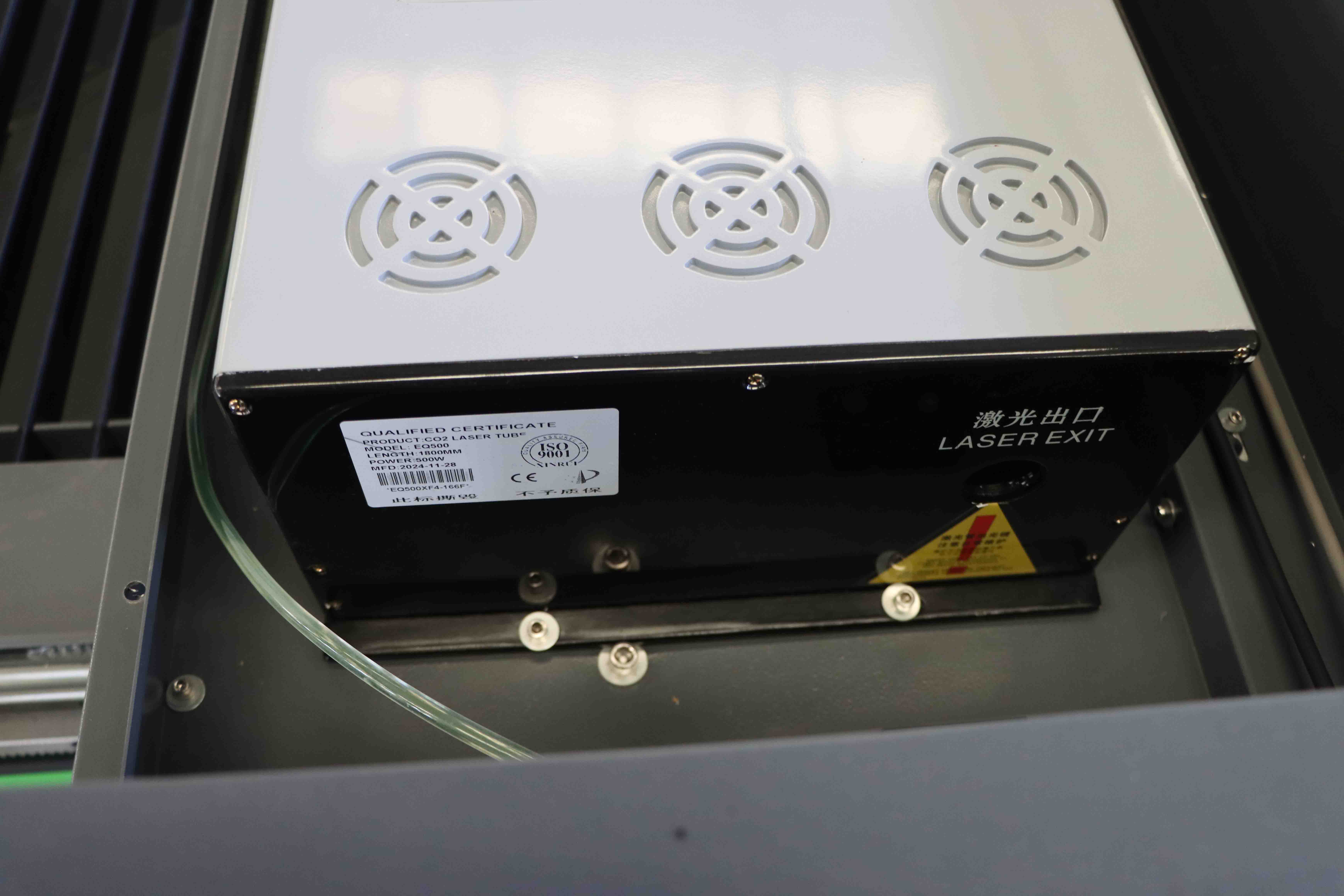
Non-metal requirements introduce a separate consideration. A pure fiber platform cannot process acrylic, wood, leather, or fabric efficiently. Where a buyer's product portfolio spans both categories, a hybrid CO2-plus-fiber configuration—such as a 200–500 W CO2 source combined with a fiber module on a 1500×3000 mm bed—provides genuine all-material coverage in a single machine, avoiding a second capital purchase.
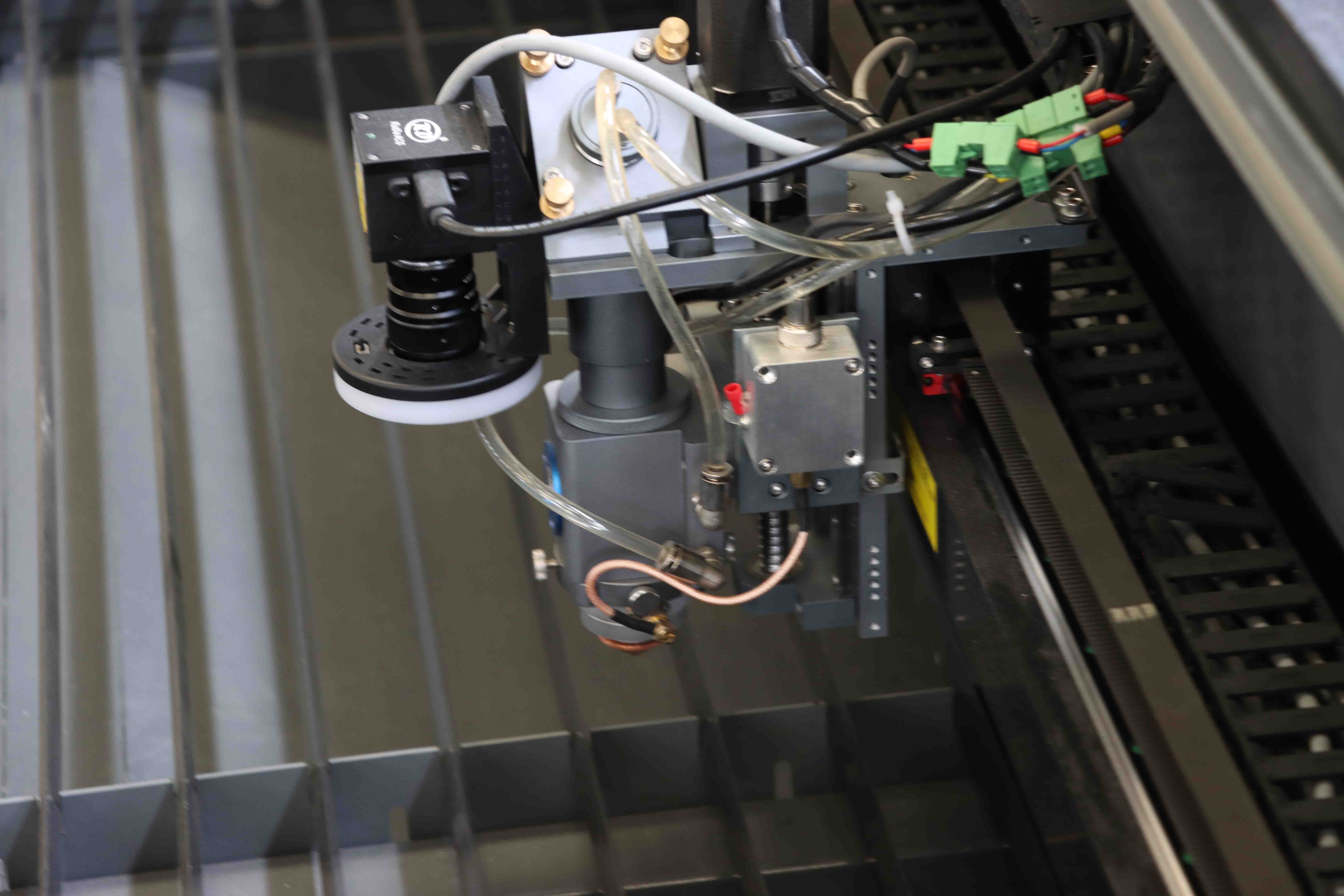
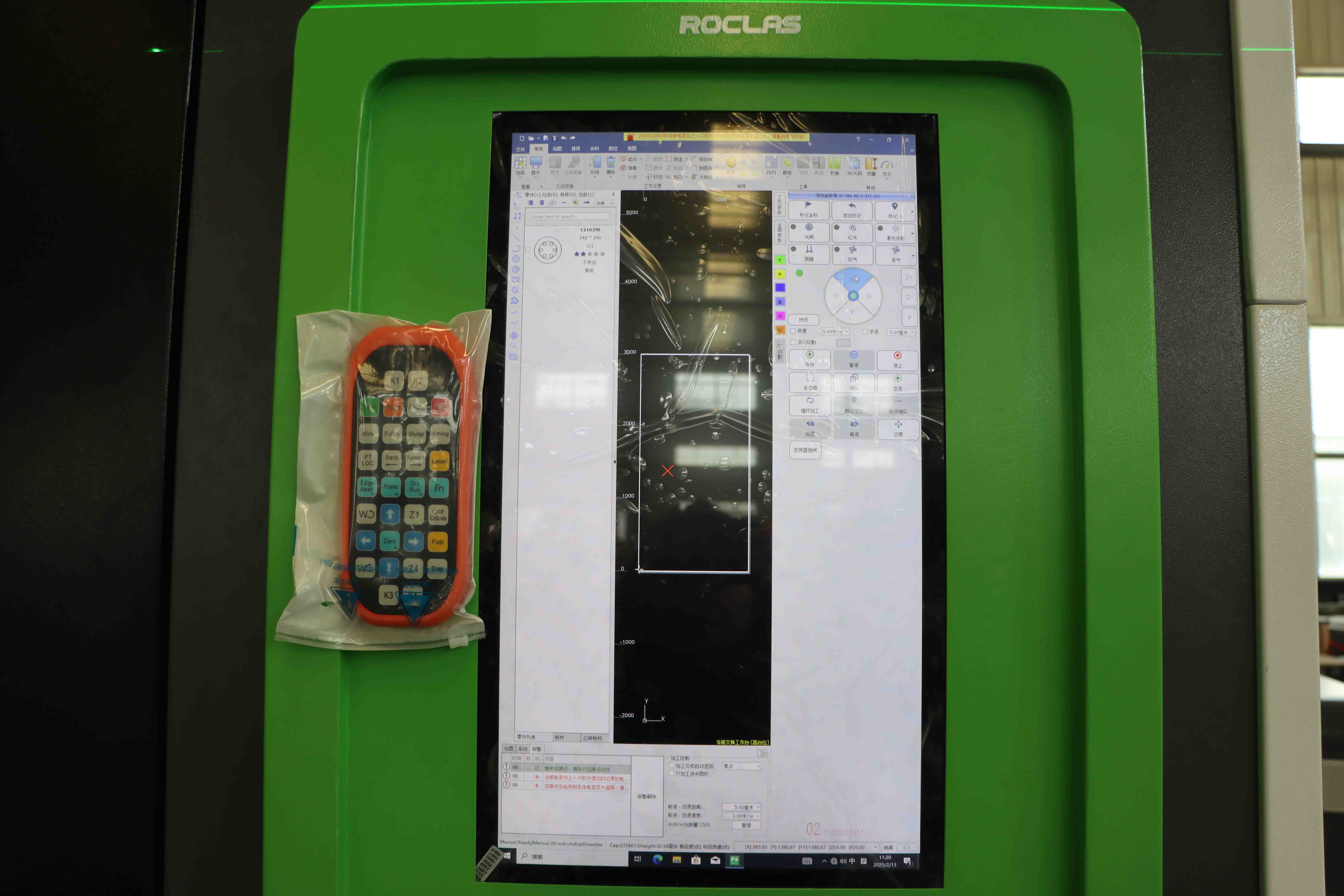
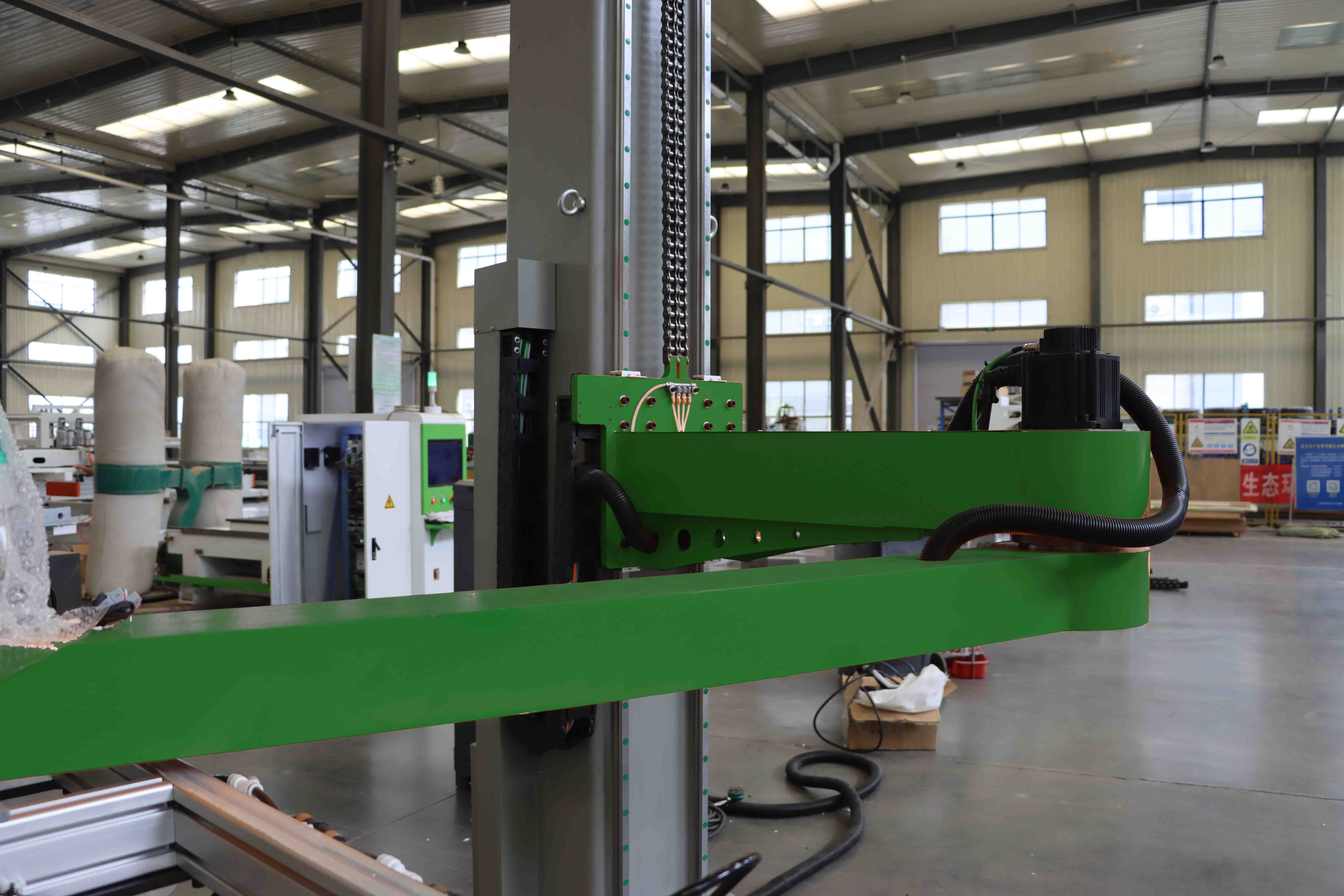
The control and drive chain deserves equal scrutiny. Cypcut 3000S has become a de facto standard for sheet and tube processing, and its nesting algorithms directly affect material utilization—a line item that frequently outweighs the machine's purchase price over a five-year horizon. On the motion side, imported servo drives and reducers, combined with a fixed-gantry, movable-workbench architecture, deliver the dynamic performance needed for thin-gauge, high-speed contour cutting. Structural details also carry procurement implications: an industrial-grade heavy-duty steel frame machined on a CNC five-face center is the baseline for vibration control, while modular screw-connected bed designs offer the same manufacturing quality with the practical advantage of disassembly for transport—relevant when site access is constrained.
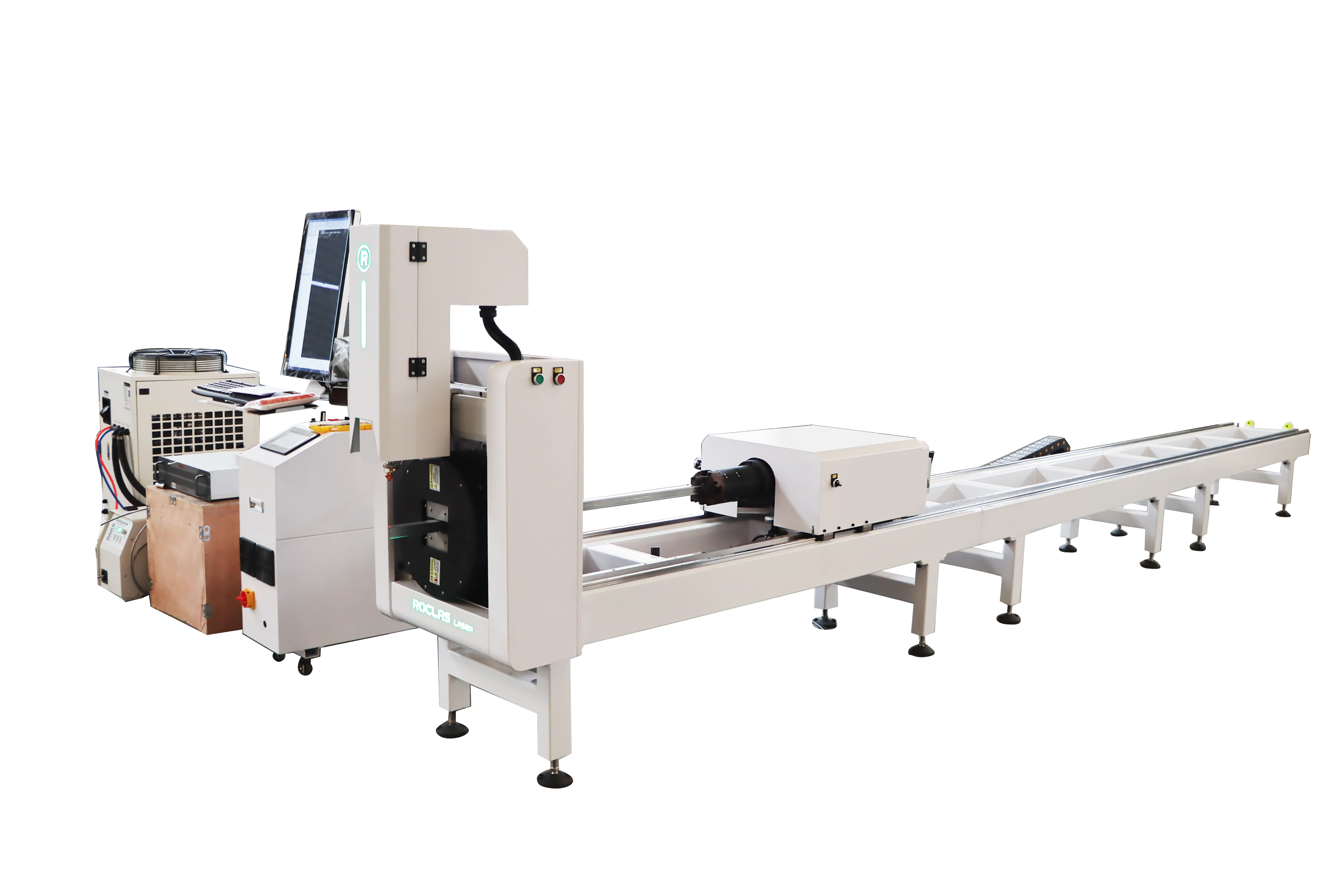
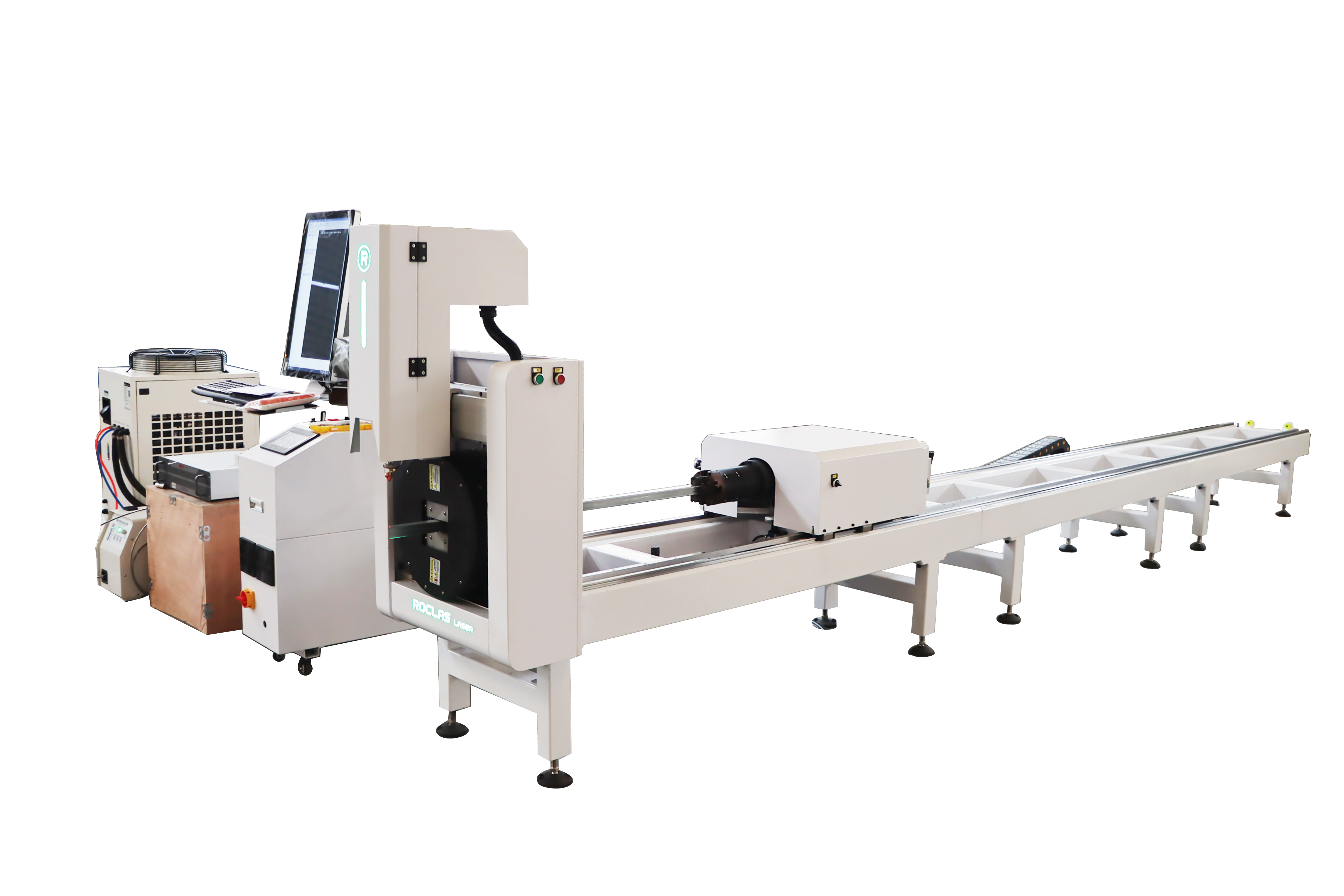
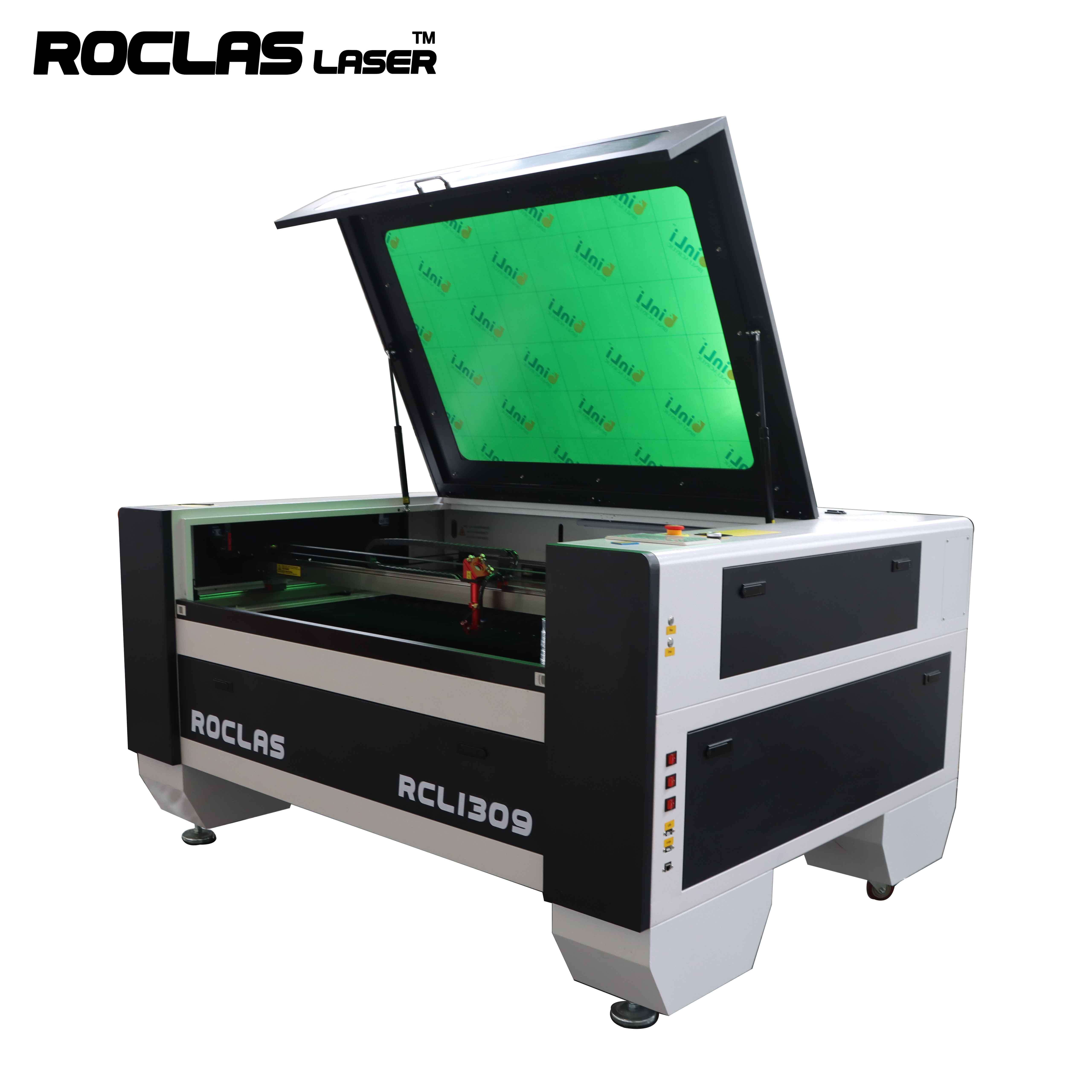
ROCLAS® MACHINERY CO., LTD. illustrates how these elements cohere in a commercial offering. With more than fifteen years in the sector, a fifteen-member R&D team, and over fifty patents supplemented by ten or more new patents annually, the company positions its fiber laser cutting platforms across the 1000 W to 20 kW range, with Raycus and MAX sources, Raytools laser heads, and Cypcut control. Its portfolio extends to five-axis three-dimensional cutting heads with n×360° infinite rotation, tube machines handling diameters up to 220 mm, and integrated sheet-and-tube models—a breadth that allows a single quotation request to be answered with a configuration matched to the application rather than a fixed catalogue item. Certifications including ISO 9001, CE, FDA, UL, and PDL, along with a stated ±0.03 mm positioning accuracy, provide the compliance and precision documentation that overseas buyers typically require before releasing a purchase order.
III. Conclusion and Outlook
A laser cutting machine quote is most useful when treated as a specification contract. Buyers should require the quotation to state power, working area, positioning and repositioning accuracy, control system, laser source and head brands, reflective-material capability, and certification status—not merely a price and a delivery date. As fiber sources continue to push beyond 20 kW and hybrid CO2-fiber platforms close the metal/non-metal gap, the differentiator will increasingly lie in structural engineering, software nesting efficiency, and after-sales responsiveness. Suppliers such as ROCLAS that document these attributes transparently are better positioned to convert a quotation request into a long-term production partnership.
Previous:Fiber Laser Source Selection in Modern CNC Fabrication: Raycus vs. MAX
Next:Not
Get a Quote
Regardless of whether you require general advice or specific support, we are happy to help you.
Recent Post
-
 Robotic Arm Laser Systems: Redefining Precision and Flexibility in Industrial ManufacturingAbstractThe integration of robotic arms with laser processing technologies represents a paradigm s...2026-07-06 16:30:57
 -
 The Ultimate Guide to High-Performance Fiber Laser Metal Cutting MachinesIntroductionFiber laser metal cutting machines have revolutionized the manufacturing industry with...2025-06-24 19:56:52
 -
 Understanding the Key Differences Between Fiber Laser and CO2 LaserIn the world of laser cutting and engraving, two types of lasers dominate the industry fiber laser...2025-03-30 09:31:59
 -
 The Ultimate Guide to Programmable Laser Cutters Revolutionizing Precision and EfficiencyIntroductionIn the realm of modern manufacturing and design, programmable laser cutters have emerg...2025-03-29 09:32:00
 -
 The Ultimate Guide to Steel Laser Cutting Techniques, Benefits, and ApplicationsIntroductionSteel laser cutting has revolutionized the manufacturing and fabrication industries, o...2025-03-24 08:31:07
 -
 Why Choose Roclas Fiber Laser Cutting for PED Components?IntroductionLaser cutting technology has revolutionized metal fabrication, offering unmatched prec...2025-06-16 07:49:19