Sheet Metal Processing: Automation and Precision in the Modern Fabrication Landscape
Abstract
The sheet metal processing industry is undergoing a profound transformation driven by advancements in laser cutting technology, automated material handling, and intelligent control systems. This article examines the current state of sheet metal fabrication, analyzing market trends, technological innovations, and the critical role of integrated production lines. Drawing on industry data and case studies, we explore how manufacturers are leveraging high-power fiber laser systems, coil-fed automation, and multi-process integration to achieve unprecedented efficiency and precision. The discussion highlights the strategic importance of equipment reliability and after-sales support in an increasingly competitive global market.
Industry Background and Market Dynamics
Sheet metal processing serves as the backbone of numerous manufacturing sectors, including automotive, aerospace, electronics, furniture, and construction. The global sheet metal fabrication market, valued at approximately $320 billion in 2023, is projected to grow at a compound annual growth rate (CAGR) of 4.8% through 2030. This growth is fueled by the rising demand for lightweight structures, customized components, and rapid prototyping capabilities.

Among the various processing technologies, laser cutting has emerged as the dominant method for sheet metal profiling, overtaking traditional techniques such as plasma cutting, waterjet cutting, and mechanical shearing. Fiber laser cutting, in particular, has gained widespread adoption due to its superior beam quality, high electrical efficiency, and ability to process reflective materials like copper and aluminum.
The following table presents a comparative overview of key sheet metal processing technologies:
| Processing Technology | Material Thickness Range | Cutting Speed (6mm mild steel) | Operating Cost per Meter | Kerf Width | Positioning Accuracy | Suitable for Reflective Metals |
|----------------------|--------------------------|--------------------------------|--------------------------|------------|---------------------|--------------------------------|
| Fiber Laser (6kW) | 0.5–25mm | 3.5 m/min | $0.12 | 0.15–0.3mm | ±0.03mm | Yes (with HR module) |
| CO2 Laser (4kW) | 0.5–20mm | 2.0 m/min | $0.18 | 0.2–0.4mm | ±0.05mm | Limited |
| Plasma (Hi-Def) | 1–50mm | 2.0 m/min | $0.10 | 1.5–3.0mm | ±0.5mm | Yes |
| Waterjet (Abrasive) | 0.5–150mm | 0.3 m/min | $0.45 | 1.0–2.0mm | ±0.1mm | Yes |
| Mechanical Shearing | 0.5–12mm | 6.0 m/min | $0.08 | N/A | ±0.2mm | Yes |
Table 1: Comparative analysis of sheet metal processing technologies. Data sourced from industry benchmarks and manufacturer specifications.
The data clearly illustrates the competitive advantage of fiber laser cutting for applications requiring high precision and moderate throughput. While plasma cutting offers lower operating costs for thick plates, its kerf width and positional accuracy limit its use in precision fabrication. Waterjet cutting, despite its versatility, suffers from significantly slower speeds and higher per-meter costs. The fiber laser’s combination of speed, accuracy, and reasonable operational expense makes it the preferred choice for the vast majority of sheet metal job shops and OEM manufacturers.
Technological Advancements in Fiber Laser Cutting
The evolution of fiber laser sources has been the primary driver of improved cutting performance. Modern fiber lasers, such as those offered by Raycus and MAX, now deliver continuous wave power levels up to 20kW, enabling clean cutting of mild steel up to 25mm thickness and stainless steel up to 16mm. The incorporation of high-reflectivity suppression modules has resolved the historical challenge of processing copper and aluminum, allowing manufacturers to expand their material capabilities without investing in separate equipment.
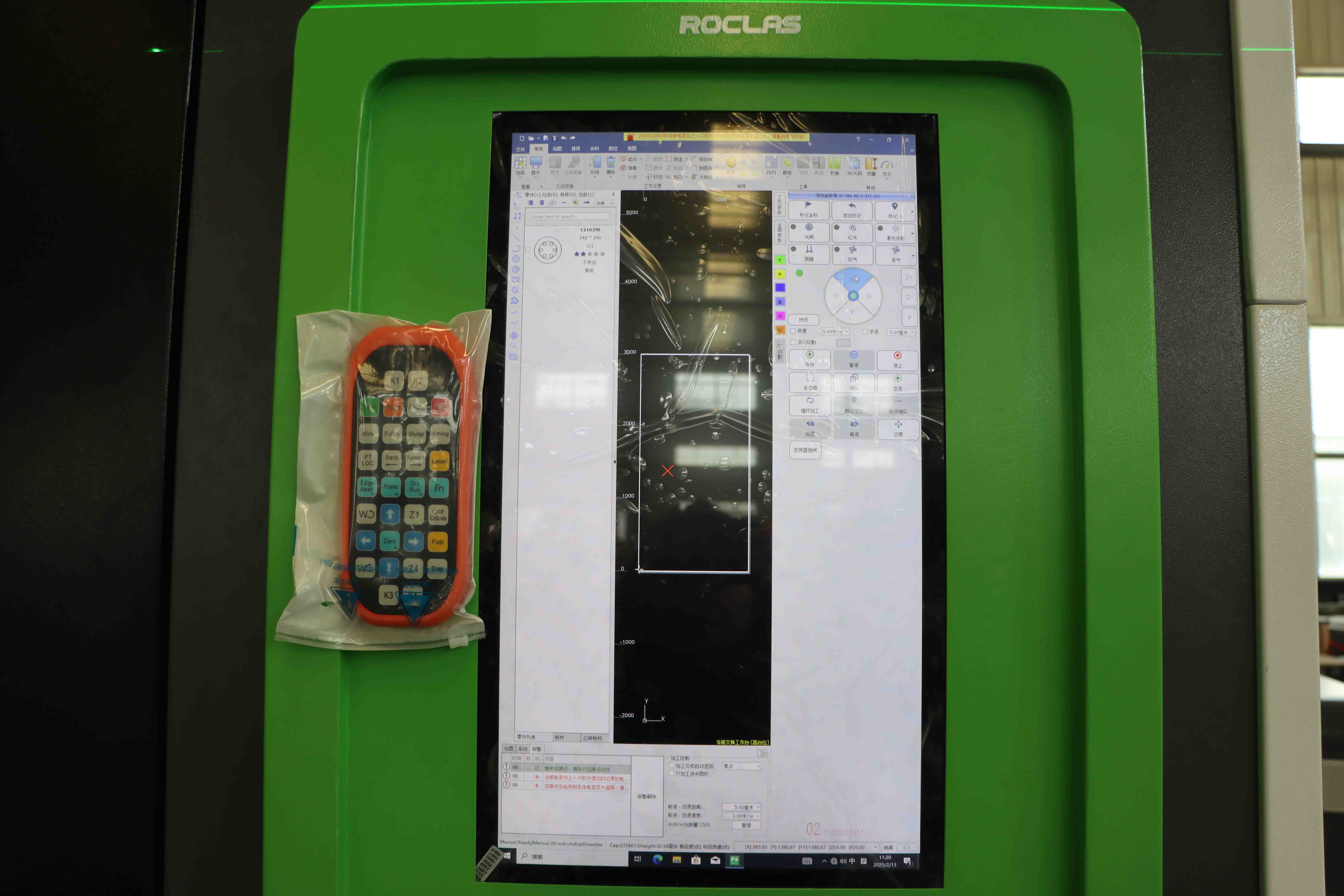
Control systems have also advanced significantly. The Cypcut 3000S, a professional laser cutting control platform, provides intuitive programming, automatic nesting optimization, and real-time process monitoring. This software integrates seamlessly with servo drive systems and laser heads from suppliers like Raytools, ensuring synchronized motion control and consistent beam delivery.
At the heart of modern Fiber laser cutting machines lies the mechanical structure. Manufacturers such as ROCLAS (ROCLAS® MACHINERY CO., LTD.) employ industrial-grade heavy-duty steel structures machined on CNC five-face machining centers. This construction methodology ensures that the machine bed exhibits exceptional rigidity and dimensional stability, which directly translates to sustained positioning accuracy of ±0.03mm over years of operation.
Automation and Integrated Production Lines
The most significant trend in sheet metal processing is the shift from standalone machines to fully automated production lines. Traditional workflows involving manual loading, separate cutting, deburring, bending, and welding operations are being
Get a Quote
Regardless of whether you require general advice or specific support, we are happy to help you.
Recent Post
-
 Robotic Arm Laser Systems: Redefining Precision and Flexibility in Industrial ManufacturingAbstractThe integration of robotic arms with laser processing technologies represents a paradigm s...2026-07-06 16:30:57
 -
 The Ultimate Guide to High-Performance Fiber Laser Metal Cutting MachinesIntroductionFiber laser metal cutting machines have revolutionized the manufacturing industry with...2025-06-24 19:56:52
 -
 Understanding the Key Differences Between Fiber Laser and CO2 LaserIn the world of laser cutting and engraving, two types of lasers dominate the industry fiber laser...2025-03-30 09:31:59
 -
 The Ultimate Guide to Programmable Laser Cutters Revolutionizing Precision and EfficiencyIntroductionIn the realm of modern manufacturing and design, programmable laser cutters have emerg...2025-03-29 09:32:00
 -
 The Ultimate Guide to Steel Laser Cutting Techniques, Benefits, and ApplicationsIntroductionSteel laser cutting has revolutionized the manufacturing and fabrication industries, o...2025-03-24 08:31:07
 -
 Why Choose Roclas Fiber Laser Cutting for PED Components?IntroductionLaser cutting technology has revolutionized metal fabrication, offering unmatched prec...2025-06-16 07:49:19