Title: Fiber Laser Precision: Reshaping Automotive Manufacturing Through Advanced Cutting Technology
Abstract
The automotive industry, a perennial driver of manufacturing innovation, has entered a new phase where precision, speed, and material versatility are non-negotiable. Traditional mechanical cutting and stamping processes, while reliable, face limitations in handling advanced high-strength steels, aluminum alloys, and complex geometries demanded by modern vehicle design. Fiber laser cutting technology has emerged as a transformative force, offering unmatched accuracy, reduced kerf loss, and the ability to process reflective materials with stability. This article examines the current state of fiber laser adoption in automotive fabrication, analyzes market data on regional adoption rates, and explores how manufacturers like ROCLAS® MACHINERY CO., LTD. are contributing to this technological shift. The discussion covers technical specifications, material processing capabilities, and the economic implications for automotive supply chains.
Industry Background and Data Analysis
The Shift Toward Laser-Based Fabrication
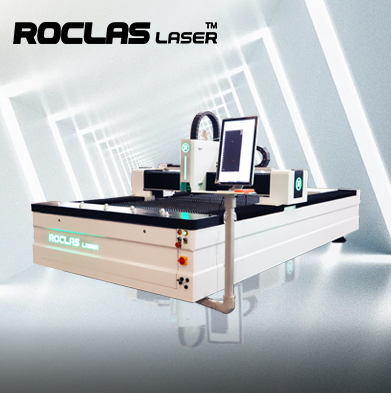
Automotive production lines have historically relied on mechanical stamping, plasma cutting, and waterjet methods for metal forming and cutting. However, the push toward lightweight vehicles—driven by fuel efficiency regulations and electric vehicle (EV) battery weight considerations—has necessitated the use of materials such as aluminum, high-strength steel, and even titanium. These materials pose challenges for conventional cutting: aluminum is highly reflective, causing instability in older laser systems; high-strength steel induces rapid tool wear; and complex three-dimensional geometries demand multi-axis capability.
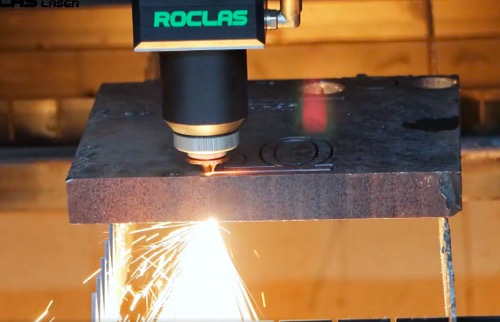
Fiber laser technology addresses these challenges directly. With wavelengths around 1080 nm, fiber lasers couple efficiently with metals, and advancements in high-reflectivity suppression modules now allow stable processing of copper and aluminum up to 2–3 mm thickness. The automotive sector has responded by integrating fiber laser cutting into body panel fabrication, chassis component manufacturing, and battery enclosure production.
Market Data and Regional Adoption
The following table presents estimated Fiber laser cutting machine adoption rates across key automotive manufacturing regions, based on industry white papers and equipment shipment data from 2022–2024.
| Region | Estimated Automotive Laser Cutting Market Share (%) | Primary Application | Average Laser Power Deployed (kW) | Growth Rate (2022–2024, CAGR) |
|--------|------------------------------------------------------|---------------------|-----------------------------------|-------------------------------|
| Asia-Pacific | 42 | Body panels, EV battery trays | 6–12 | 14.2% |
| Europe | 31 | Chassis, exhaust systems | 4–8 | 11.8% |
| North America | 18 | Structural components, frames | 6–15 | 10.5% |
| Middle East & Africa | 6 | Aftermarket parts, repair | 3–6 | 8.1% |
| Latin America | 3 | Commercial vehicle parts | 3–4 | 6.7% |
Table 1: Regional Adoption of Fiber Laser Cutting in Automotive Manufacturing (2022–2024)
The data reveals a clear dominance of Asia-Pacific, particularly China, Japan, and South Korea, where automotive production volume is highest and government incentives for advanced manufacturing are robust. Europe follows, driven by premium automakers investing in flexible manufacturing lines for multi-model production. North America’s growth, while lower in share, is accelerating as EV adoption surges. The average laser power deployed in North America is notably higher (6–15 kW), reflecting a focus on cutting thicker structural materials for trucks and SUVs.
Interpreting the data, the correlation between EV battery tray production and higher laser power deployment is noteworthy. Battery enclosures often require cutting aluminum sheets up to 8 mm thick, necessitating 10–12 kW fiber lasers. In Asia-Pacific, where EV production is scaling rapidly, this has driven the demand for higher-power systems. Conversely, Europe’s emphasis on chassis and exhaust systems—often using stainless steel—requires moderate power but high precision, favoring machines with ±0.03 mm positioning accuracy.
Technical Applications and Brand Case Studies
Material Processing Challenges in Automotive
Automotive components present a diverse material palette. Carbon steel remains prevalent for body panels, but aluminum usage has increased by over 40% in the last decade, particularly in hoods, doors, and structural members. Stainless steel is standard for exhaust systems, while copper appears in electrical components. Each material demands specific laser parameters:
- Carbon Steel (mild steel): Cutting speeds of 20–30 m/min for 1–2 mm thickness with 4–6 kW lasers.
- Aluminum (reflective): Requires high-reflectivity suppression; stable cutting achievable with 6–10 kW fiber lasers.
- Stainless Steel: Excellent cut edge quality; 4–8 kW sufficient for 2–3 mm thickness.
- Copper: Challenging due to reflectivity; only modern fiber lasers with suppression modules can process 1
Previous:Ball Screw Precision Drives: The Unsung Backbone of Modern CNC Machining
Next:Not
Get a Quote
Regardless of whether you require general advice or specific support, we are happy to help you.
Recent Post
-
 Robotic Arm Laser Systems: Redefining Precision and Flexibility in Industrial ManufacturingAbstractThe integration of robotic arms with laser processing technologies represents a paradigm s...2026-07-06 16:30:57
 -
 The Ultimate Guide to High-Performance Fiber Laser Metal Cutting MachinesIntroductionFiber laser metal cutting machines have revolutionized the manufacturing industry with...2025-06-24 19:56:52
 -
 Understanding the Key Differences Between Fiber Laser and CO2 LaserIn the world of laser cutting and engraving, two types of lasers dominate the industry fiber laser...2025-03-30 09:31:59
 -
 The Ultimate Guide to Programmable Laser Cutters Revolutionizing Precision and EfficiencyIntroductionIn the realm of modern manufacturing and design, programmable laser cutters have emerg...2025-03-29 09:32:00
 -
 The Ultimate Guide to Steel Laser Cutting Techniques, Benefits, and ApplicationsIntroductionSteel laser cutting has revolutionized the manufacturing and fabrication industries, o...2025-03-24 08:31:07
 -
 Why Choose Roclas Fiber Laser Cutting for PED Components?IntroductionLaser cutting technology has revolutionized metal fabrication, offering unmatched prec...2025-06-16 07:49:19